What Happens When You Call
What Happens When You Call
No mystery and no surprises. Here's the call, the day, and what happens after.

Who picks up
Austen Yanish, or a call back from him. If you have no water, we'd rather you called than filled in a form — the phone is faster, and a two-minute conversation usually tells us more than a form ever could. We answer the phone. If your well goes down at 2 AM, someone picks up — and we will travel up to an hour out at that time of the morning to get your water back on.
The five things we'll ask
Here's the call, more or less, and why each one matters:
- 1What's the house doing? — No water at all, weak pressure, or water that looks or smells wrong. The symptom narrows it before anything else does.
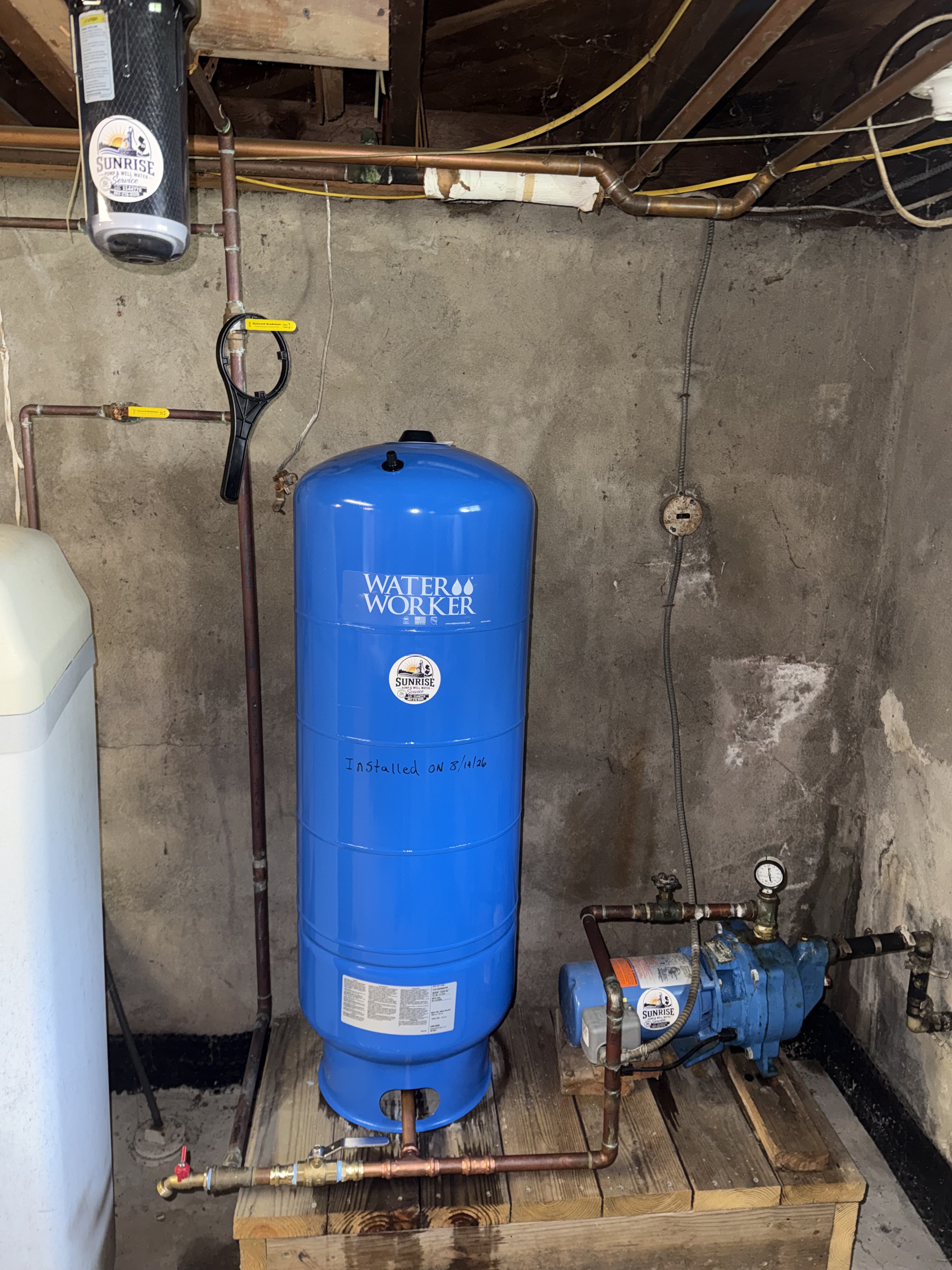
- 2What does the pressure gauge on the tank read? — Zero, stuck, or climbing and dropping straight back down each tell a different story. The gauge is the single most useful thing you can look at.
- 3Has the breaker tripped, and did it trip again when you reset it? — A one-off trip is one thing. A breaker that trips again immediately is a short or a failing motor, and we need to know that before we come.
- 4Where are you, and is the wellhead accessible? — Town tells us the drive. Access — whether the wellhead is clear, behind a shed, under a deck, or up a slope — tells us what the day looks like when we get there.
- 5Do you know anything about the well? — How deep, how old, whether there's a record or a previous invoice in a drawer. Any of it helps. None of it is required to call.
The answers usually tell us what to put on the truck, which is the difference between one visit and two.
What we'll tell you on the phone
An honest arrival window, not a guaranteed time. What it might be, ranked by likelihood, without a price attached to a guess. And what to do or not do in the meantime — usually, stop using the water if it's cloudy or sandy, and don't keep flipping a tripped breaker.
On the day
Diagnose first. Show you what we found. Give you the price before the work starts. If the cheap fix is the right fix — a pressure switch, a capacitor, a blocked filter — we say so and do that instead.
If it's bigger than a one-visit job
We make the water safe, tell you what water you have in the meantime, and order what's needed. You'll know what's been done, what's coming, and when.
Before we leave
Full pump cycle checked, pressure and cycling behaviour confirmed under real load — not one tap, the house. The system disinfected if it was opened. And you're told what to watch for over the next few days.
Afterwards
If the well was disinfected, we tell you when to retest — through a certified lab, after the chlorine has cleared. We'll talk through what maintenance the system needs, and you can read more on our well system maintenance page.
What we'll tell you if it isn't our job
If it's a drilling or well-sealing job, or plumbing outside what we do, we say so and point you in the right direction. See our page on sealing an old well in New Jersey for why that's a different licence. We'd rather lose a job than do it badly.
We answer around the clock
No water? Call. Don't type.
The person who answers the phone is the person who shows up. If you're standing in a dark basement with no water, the phone is faster than any form.
(862) 276-0328