Low Water Pressure
Low or Dropping Water Pressure on a Private Well
Low pressure is four completely different problems wearing the same coat, and which one you have decides whether this is a twenty-minute fix or a new pump. We figure out which before we sell you anything.
First question: is it everywhere or is it one fixture?
One fixture: check the aerator, the cartridge, and the supply valve under the sink. That's plumbing, not a well problem. The whole house: keep reading.
The usual causes, in the order we check them
- A clogged sediment or whole-house filter that nobody has changed. Check this first; it's the most common and the cheapest. A homeowner can see it by looking at the filter.
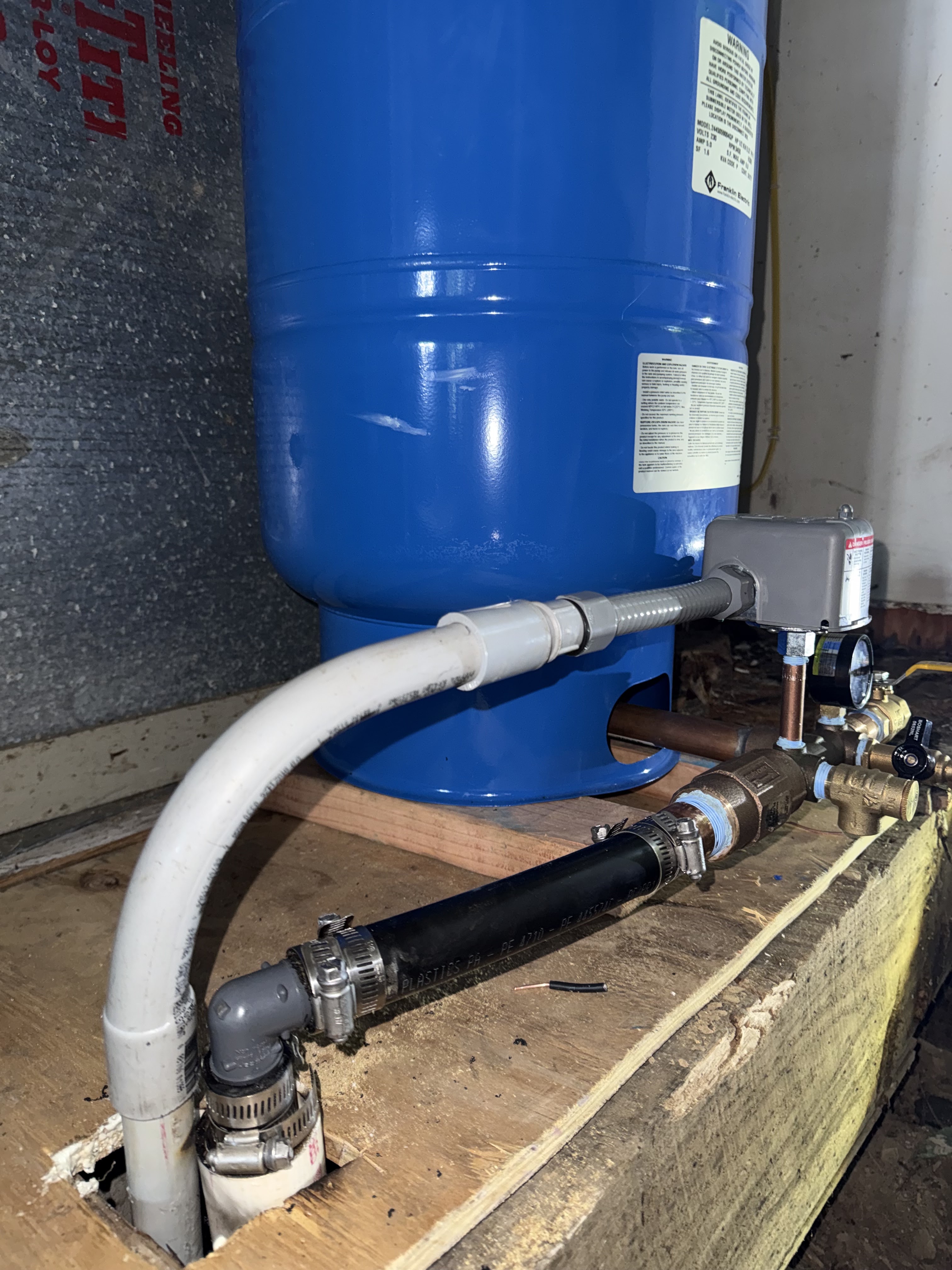
- A pressure switch set low, or with burnt contacts. The switch is the small box on the tank tee — if it's blackened, that's the sign.
- A waterlogged pressure tank, which reads as pressure that collapses the moment you open a tap. Tap the side; if it's solid, the air charge is gone.
- A partially closed valve or a pressure-reducing valve somebody set and forgot. Walk the basement and check every handle.
- Scale and iron buildup narrowing the inside of older galvanized supply piping. A slow, long-term decline points here.
- Iron bacteria slime fouling the well screen, the pump intake or the filters. Slimy, rusty buildup at the filter is the tell.
- A pump losing performance rather than failing outright — running, but not pushing as hard as it should.
- A well whose water level drops under sustained use. Pressure that's fine first thing in the morning and poor after two showers and a load of laundry points here.
Pressure versus flow — the distinction nobody explains
Pressure is how hard the water pushes. Flow is how much arrives. A house can have good pressure at a single tap and still run out when the washing machine and a shower run together — and that's a flow and yield question, not a pressure switch question.
Why it matters: the fix is different. Anyone who only adjusts the switch will have solved nothing, because the switch isn't the problem. The well can't produce enough water to keep up, and no switch setting changes that.
Constant-pressure systems
A variable-speed constant-pressure setup holds steady pressure as demand changes instead of swinging between the switch's cut-in and cut-out. It's good for houses where the pressure swing is the complaint. The honest part: it is an upgrade, not a repair, and it will not fix a well that can't produce enough water. If the well runs dry under load, a fancier pump won't give you water that isn't there.
What we do
We test at the tank, at the switch and at a fixture. We check the tank's air charge with the system drained. We check the amp draw. And we run the house under real load rather than one tap, because the problem often only appears under load — one faucet is fine, two showers and the washer is not.
Where we work
Sussex County top to bottom, northern and central Warren County, and the northern Passaic County highlands. See the service area map.
Drilling a new well and sealing an old one are a different licence — a licensed well driller — and we don't do that work. See our NJ pump installer licence page. Related: our well pump replacement page and our well tank replacement page.
Straight answers
Questions we get on this one
Why is my pressure fine in the morning and bad at night?
Usually a well that can't keep up with sustained use — two showers and a load of laundry in a row pulls the water level down faster than the well recovers. By morning it's recovered. It can also be a tank or a switch, but the time-of-day pattern points hardest at the well's yield.
Will a bigger pump fix low pressure?
Usually no. If the well can't give the water, a bigger pump just pumps it dry faster, sucks air, and burns out. Oversizing is the wrong answer to a yield problem. We figure out whether it's the pump, the tank, the switch or the well before we touch anything.
Why did my pressure change after a new filter?
A fresh whole-house or sediment filter slows the flow until it's broken in, and a filter that's too small for your flow chokes it from the start. If the pressure dropped the day the filter went in, the filter is the first suspect.
Can hard water cause low pressure?
Indirectly. Hard water scales up the heater, the fixtures and the inside of pipes, and over years that narrowing shows up as lower flow. It's a slow problem, not a sudden one. If the pressure dropped overnight, scale isn't the cause.
Is 30/50 or 40/60 better?
Those are pressure switch settings — the pressure the pump cuts in at and cuts out at. A higher setting gives more pressure but works the pump harder and can expose weak fittings. The right one depends on your pump, your tank's air charge and your plumbing, and we won't recommend a setting without seeing the system.
Why does my pressure drop when the sprinklers run?
Because the sprinklers are pulling more water than the pump can hold at pressure — the well or the pump can't keep up with the extra demand. It's the same root cause as pressure that fades under any heavy use: the system is asked for more than it can deliver at once.
We answer around the clock
No water? Call. Don't type.
(862) 276-0328No water right now? Call (862) 276-0328.
Or request service online — but if you're standing in a dark basement with no water, the phone is faster.